Tag Archive for: Find your way

Marriage

Finding Your Way – Part 4

“So at the end of this day, we give thanks
for being betrothed to the unknown.”

~ John O’Donohue

Press play to hear an audio enhancement as you read.


Most people fear the unknown and long for security. But there’s a reason we call the worst form of imprisonment “maximum security.”

We live in a culture of fear and buy insurance to protect us from the unknown, unforeseen, and unexpected “accidents,” suspecting that the universe is out to get us. We describe the worst calamities as “acts of God,” blaming the Divine – which we are instructed to love – for our worst misfortunes.

No wonder we suffer from what’s known as “cognitive dissonance.”


Wikipedia defines cognitive dissonance as “the mental discomfort (psychological stress) experienced by a person who simultaneously holds two or more contradictory beliefs, ideas, or values.” 1

Society is riddled with contradictions. We fight for peace. We destroy excess food to keep prices high … while children starve. We ignore the sun and fuel our world with toxic chemicals, then choke on the pollution. Doctors, who’ve survived four years of pre-med, four years of medical school, and three to seven years of residency, graduate with almost no understanding that what we eat affects our health. Simultaneously, they do understand that putting sugar in a gas tank will damage an engine. Every time.

We live in an unconscious trance of cognitive dissonance. This becomes conscious whenever we are “triggered by a situation in which a belief …. clashes with new evidence …” The Wiki article continues. “When confronted with facts that contradict personal beliefs, ideals, and values, people will find a way to resolve the contradiction in order to reduce their discomfort.”
Fake News

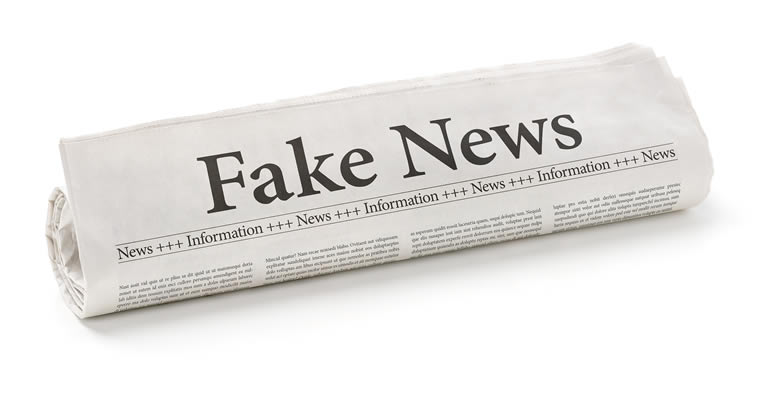
Often the way we reduce our discomfort is to deny the obvious and embrace something we can twist to support our beliefs. The furor over “fake news” these days exposes just how bothersome the truth can be. Why should facts be able to sabotage my personal agenda? That’s fake news!

We struggle for security, for the “good old days” which exist in memory like a fish story, much better in recollection than actual fact. For instance, the idea of making America great again pivots on several beliefs that, together, produce a hypnotizing dose of cognitive dissonance.

1. There was some particular time when America was “great.”
2. There has never been a time that was great for all Americans, unless you ignore slavery, genocide practiced on native Americans, The Civil War, etc.


Here’s another duo of conflicting beliefs:

1. Great as our nation was, somehow we stumbled and are not so great anymore. Statistics comparing America to other countries in many specific areas certainly proves that we have been slipping.
2. We are convinced that this is still the greatest county in the world, based on … our beliefs!

Tree in hands

Meanwhile, something else is going on. If we can raise our gaze for a moment and peer above the furor of society’s soap opera, we might notice that 99% of life is continuing as always. They say that the mills of the Gods grind slow but exceedingly fine. Yes, there is a slower rhythm to the natural world. Compare how a tree grows with the steady onslaught of computer and phone upgrades, more frequent all the time. But the tree doesn’t crash.

We can see something different from way up here, a kind of order to everything, including the chaos. Consciousness is orchestrating everything, after all, even what we believe are mistakes and accidents. Everything is an act of God, if we include ourselves in what God is. That only sounds arrogant until we realize it’s actually arrogant to claim an identity separate from God. We are not separate, we are not spectators, we are co-creators, and it’s honest to take responsibility for our creations.

That happens in the ever-present moment which, obviously, is when we are doing our creating. Moment by moment we are expressing ourselves, making choices, doing things, and it all adds up to the reality of “life.” Necessarily, we are always dancing with the unknown and real security never exists in some invulnerable state we can count on forever. Lightning strikes, stocks drop, hearts falter … we never know for sure what’s around the next corner.

Ok sign

So, we have a fundamental choice: embrace the unknown and betroth ourselves to this mystery called life, or flail away in resistance, longing for a security we can never guarantee. The smart choice? As the poet John O’Donohue wrote, we can “give thanks for being betrothed to the unknown.”

Why? Because life is a perpetual journey of discovery, regardless of how firmly we nail things down. Even just the desire for “maximum security” turns out to be imprisonment, but we hold the key to freedom in our own hands: choosing to be fully present and welcoming the unknown.

We can walk without fear in the dark, whistling if we need to, because we know that the sun will rise, the rhythms of the natural world will have their way and, to the degree that we include ourselves, this becomes our way.


References:
1. https://en.wikipedia.org/wiki/Cognitive_dissonance

Compass in hand

Finding Your Way – Part 3

“I may not have gone where I intended to go, but
I think I have ended up where I needed to be.”

— Douglas Adams

Press play to hear an audio enhancement as you read.


The spiritual path operates on dimensions our human minds can’t track. That’s why one of the most practical navigational strategies is to let go.

Blogger Stacey Kennelly wrote, “’Stop and smell the roses’” may be a cliché, but new research suggests it’s sound advice for finding satisfaction in life. A forthcoming study in the Journal of Personality and Individual Differences suggests that appreciating the meaningful things and people in our lives may play an even larger role in our overall happiness than previously thought.”

What happens when we do stop and smell the roses? We appreciate them. They were there all along but we missed seeing them, smelling them, and we also missed expressing appreciation. Of course, when we stop – that is, exit the hamster wheel of distractions and addictions – there’s much more than roses to see and much more than appreciation to feel.


Life is like a closed book; until you open it, there’s nothing much of interest visible. What really needs opening, though, is our hearts, because here’s where our navigation system for a meaningful life resides. Following the guidance of the heart is entirely different than the kind of navigation thinking produces. It’s the heart that bids us stop, for one thing, and it’s the heart that can feel appreciation. And the meaning that Kennelly referred to may not actually reside in the object of our observation but in the act of observing from a heart space.

Quantum researchers propose that what we call reality exists as a field of unlimited probabilities that collapse into experiences as we observe. Wiki defines one classic quantum law, The Observer Effect, as “the theory that simply observing a situation or phenomenon necessarily changes that phenomenon.” 2

So, it’s not just stopping to smell the roses but the way we view them that can produce a meaningful experience. If this theory is true, a whole new world of possibilities opens to our imagination. What if we took responsibility for how we viewed our world, moment by moment? We could prove (or disprove) another popular quantum convention: “As viewed, so seen.”

Smelling Rose

When we let go of mind-centered guidance, which honors logic and efficiency, in favor of heart-centered navigation, which employs emotion, we begin to tap into the stuff of Gods. We become truly creative. “Behold, I create” we might declare, in a grandiose moment, acknowledging that we are indeed creating the reality we experience.

Then a very different path leads us on. There are more curves here, less certainty about direction, but more fulfillment along the way. It’s popular to say that the journey is more important than the destination but what if the journey was the destination? What if an enlightened life is not about arriving at some destination, a state of illumination with deep, cosmic understanding, but mastering the skill of presence, being able to be fully here and now to appreciate it all?

We may have met an enlightened janitor! How about that gentle soul who never tires of playing with his grandchildren, because he’s retired from that hamster wheel and he’s truly content?


Content! What a concept. Who’s content these days? Well, the roses are content. In fact, it’s absurd to imagine anxiety in nature. Trees don’t worry about squirrels climbing them and birds sitting in them. Streams don’t get anxious as the rapids approach. It’s difficult to even imagine such things. It’s humans that worry.

Don't worry

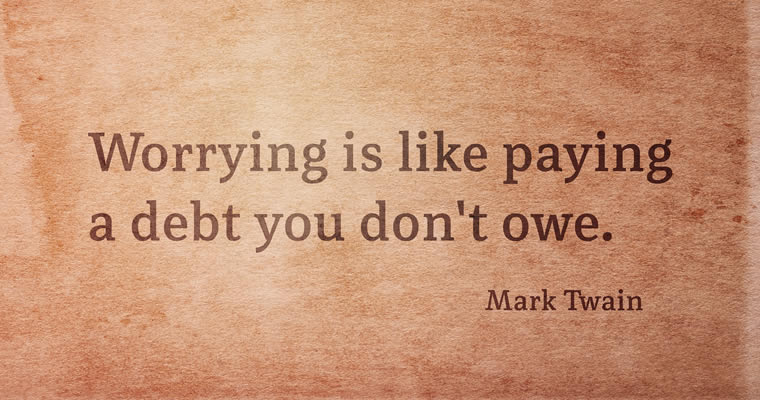
Will Rogers said, “I know worrying works because none of the stuff I worried about ever happened.” That’s one way of looking at it. Another perspective, from Mark Twain: “I’ve had a lot of worries in my life, most of which never happened.” And, as Dr. Graham Davey writes in Psychology Today, “The worrier spends hours worrying, with the usual outcome being that the topic of the worry now seems much worse than better!” 3

We can literally worry our lives away. But that’s not really living, let alone evolving our spiritual practice! Here we are, in this moment. What are we aware of? Can we expand our awareness? As we do, can we appreciate the more that we become aware of, whether it be roses or people we’ve barely seen or situations we unconsciously decided were insignificant?

In other words, how does the world we see change when we change how we view it? Who knows where we might end up when we freed our perception from limiting beliefs and followed our hearts to where we end up? Destination: right here, right now.


References:

Finding your way

Finding Your Way – Part 2

“Not all those who wander are lost.”

— J.R.R. Tolkien

Press play to hear an audio enhancement as you read.


Going straight from A to B may seem the shortest and best route but only when we neglect to take topography into account.

Maps are two dimensional. But they often also describe height, the third dimension, with shading and lines and printed elevations. This is important, because once we start hiking, topography becomes a key determiner for navigation. For instance, we can’t really bore through a mountain and climbing it is equally impractical. We go around mountains and hills, perhaps by finding a valley to follow.

This provides an interesting metaphor for our spiritual journey. And it recalls the story about an enthusiastic student who asked his master how long it would take to achieve enlightenment if he meditated two hours every day. “Five years,” his teacher replied.


“And how long if I meditate four hours every day,” the student asked. His master smiled and said, “Well, then it will take you twenty years.”

His point had little to do with meditation or time; he was exposing the futility of ego ambition and the fallacy of trying to manage our journey at a mental level. As important as meditation is, plus other spiritual practices and worthwhile disciplines, the whole point is to surrender ego identification. Remember, it’s the human ego that likes to take credit for what’s achieved.

In this case, the student was earnestly trying to accelerate his spiritual progress. But his master pointed out that the “I” wanting to do that was the problem! More effort authored by the student’s ego – however appropriate the actions might seem to be – could only serve to slow down his actual progress.

Masters understand that we make the path by walking it. Yes, we follow in the footsteps of sages who have gone before, but they did the same. We can study and theorize and meditate all we want, but putting one foot down in front of the other in our daily lives is how we actually get from where we are now to wherever we would like to go. So, it’s not as important to meditate a certain number of hours a day as it is to “be meditated” (to surrender control) and learn how to stay in that humble state more and more moments of every day. We are not controlling, we cannot control, the process of awakening.

Finding your way

And, there’s no guarantee that the path will be easy. In fact, if it’s the real path, it’s not. The modern mystic Andrew Harvey likes to say that the true path is not for sissies! We know this from experience and we also know that if we don’t quit, we will always learn more from the tough times than the easy ones. Of course, we tend to linger in our cozy, comfort zones. But, when it’s time to move on in life, those comfort zones begin to become uncomfortable. It’s time to let go.

The Buddha said that “You can only lose what you cling to.” One of the most precious things we cling to is our addiction to knowing the way and our fear of getting lost. But the ego needs to get lost! As long as it’s running things we will be running around in familiar circles, deluding ourselves that we’re getting somewhere, like hampsters on their wheels, running furiously and going nowhere.

Instead, we can enjoy the feeling of getting lost, of wandering and wondering and letting go to another kind of guidance. How often has something surprisingly helpful occurred when we did exactly that? How much more could happen if we did it more often? Those were trick questions, reprising the student inquiring of his teacher. Did you notice how easy it was for your ego to get in gear and apply this new idea. “Oh, I will now get lost regularly and that will help me on my way.”


It’s healthy to notice our own ego machinations and have a good laugh at ourselves. Many on the spiritual path become obsessively serious but let’s remember than God is the original trickster! This is a game, a joke, a play in consciousness. If God’s not taking this seriously, why should we?

That may sound irreverent and callous, given the suffering in the world but we can’t help those sinking in quicksand by jumping in ourselves. No, we learn how to stand solid on the shore and reach out a hand to those in need. But they must reach towards us too and accept our help. Otherwise, we might lean too far and fall in ourselves. That’s not going to help us move along the path and it won’t help them either!

We continue. That’s one of the ancient definitions of “tantra,” to continue. Because the path goes on forever.


References:

Compass in hand

Finding Your Way

“People who fit don’t seek.
The seekers are those that don’t fit.”

— Shannon L. Alder

Press play to hear an audio enhancement as you read.


Billions of people seem content to live from day to day without much thought about meaning and purpose. But millions of others remain discontent, regardless of comforts, distractions, success, and even love. They want something more.

Seekers seek. But there’s a paradox here: as long as we’re seeking, we clearly haven’t found what we’re looking for. Hence the popularity of teachers and programs that promise answers and the tendency for seeking to become an identity. People sometimes describe themselves as a seeker of truth but how many actually find it? One might say this is a spiritual corollary to the pursuit of the American Dream. Both are hard to catch up with!

On the other hand, if we never start looking, we’ve no chance of finding “it,” whatever we conceive “it” to be (enlightenment, fulfillment, happiness, etc.).


Like all decent riddles, there’s an obvious answer hidden in the rhetoric (which means that we likely can’t see it). After all, we humans have become expert at missing the obvious. For instance, how difficult, really, is it to imagine using the sun for an energy source. Duh… Perhaps we’re missing something just as obvious with our seeking.

“Seek and ye shall find,” is the ancient injunction and it certainly sounds wise, as common sense a piece of advice as you could ever give or get. Except, it doesn’t work exactly that way relative to the deeper search for personal meaning.

T.S. Eliot wrote, “We shall not cease from exploration. And the end of all our exploring will be to arrive where we started and know the place for the first time.” Perhaps the clue we need to unravel the paradox lies here, in these words. Eliot points to a return to where we began, rather than a distant destination. In other words, here and now is the what and when we are seeking. Our explorations are meant to bring us back to our starting point which we will experience differently, because of our journeying.

Find Your Way

Sages down through the ages have advised us to “be here now.” Ram Dass, who wrote the book by that name in 1971, also said, “The heart surrenders everything to the moment. The mind judges and holds back.”

Here’s another vital clue to guide us along our way. It’s true that the mind complicates our seeking. We hear it chatter about how we need to change this and that, about what’s lacking in ourselves and in the world. All these judgements contribute to us holding back and hesitating. “Surely I’m not there yet,” seems to be a valid observation and it seems to be true. If the point is to swim in a river and we’re still standing on the bank… we’re not swimming in the river.

Of course, the simple remedy is to dive in! And that’s exactly what our hearts urge us to do, when they surrender everything to the moment. The mind says, “What moment?” and has a list of requirements for the perfect moment.


Found your way

BTW, if it’s not obvious, this is the moment. There can be no other. This is the moment for your heart to surrender everything, for your mind to be still, for you to have the experience you have been seeking. And I certainly need to be having this exact experience as I write; how hypocritical it would be to merely write and instruct and remain stuck somewhere on the path myself!

So, does it seem arrogant to speak from this place of experience?

It may help to translate the concept of enlightenment, a noun, into “enlightening,” which is verb. Buckminster Fuller, an American inventor, architect, and global systems visionary, wrote a book entitled, I Seem to Be a Verb.” He wrote, “I know that I am not a category. I am not a thing – a noun. I seem to be a verb, an evolutionary process – an integral function of the universe.”

Imagine that. What if, as “an integral function of the universe,” we fit in the most sublime way possible, as an irreplaceably unique ingredient in the unimaginable complexity of the living, breathing reality that includes absolutely everything? In fact, here is our enduring truth and this explains why we became seekers in the first place, because we simply could not fit in a human context divorced from this context. We always knew…

And so, our explorations cease. We return to the place from which we began and we know it for the first time. Our journey is over … and it is also just beginning. We are enlightening … shining our lights, illuminating our way. Here is the paradox of living on the path, a journey the mind will never understand but one all hearts hunger for.


References: